Repeat purchase rate is the metric that tells you whether your store is building real customer loyalty or simply relying on paid ads to drive sales. Improve it by just 5 percentage points and, according to research from Bain & Company, profits can increase by 25–95%. The number may seem surprising, but the research supports it.
Most Shopify stores lose 70–75% of their customers every year. That means for every four customers you acquire in January, three may never buy from you again. If your marketing budget focuses only on acquiring new customers without a strategy to bring them back, growth becomes more expensive and harder to sustain.
This guide explains what a good repeat purchase rate looks like in 2026, why category benchmarks matter more than overall averages, and which retention strategies have the biggest impact.
WHAT YOU’LL LEARN
- 2026 repeat purchase rate benchmarks by ecommerce category
- Why below 20% signals a structural problem, not just a tactics gap
- The economics of repeat buyers vs first time buyers
- Five retention levers that move repeat purchase rate within 90 days
What Is the Repeat Purchase Rate?
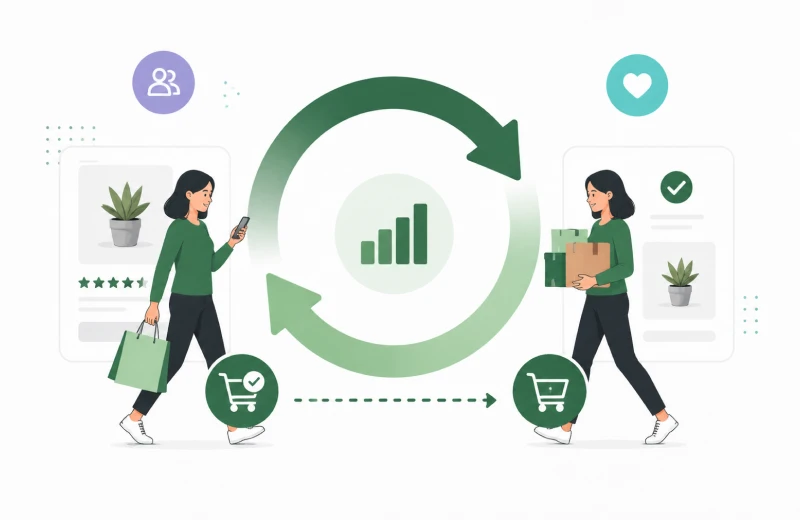
Repeat purchase rate (also called repeat customer rate or returning customer rate) is the percentage of your customers who have made more than one purchase within a given time period, usually 12 months.
REPEAT PURCHASE RATE FORMULA
- Repeat Purchase Rate = (Customers Who Purchased More Than Once ÷ Total Customers) × 100
- Example: 320 repeat customers ÷ 1,200 total customers = 26.7%
- Note: This is different from customer retention rate, which measures active status.
Repeat purchase rate measures actual repurchasing behavior.
2026 Repeat Purchase Rate Benchmarks by Category
The average ecommerce repeat purchase rate is 28.2% (Shopify, 2025) but that number is almost meaningless without category context. A 20% repeat rate might be excellent for luxury goods and poor for supplements.
28.2%
avg Shopify repeat rate
25–95%
profit increase from 5% retention gain
5–25x
cost to acquire vs. retain a customer
| Category | Avg Rate | Strong Rate | Context |
| Supplements & Health | 33–36% | 40–50% | Replenishment drives frequency |
| Beauty & Skincare | 30–35% | 38–45% | Routine based; loyalty friendly |
| Food & Beverage | 28–32% | 38–50% | High frequency; subscription potential |
| Apparel & Fashion | 20–26% | 30–38% | Lower frequency expected |
| Home Goods | 15–22% | 25–30% | Seasonal; style driven churn |
| Luxury / High ticket | 10–18% | 22–28% | Longer purchase cycles |
| All Shopify average | 27–28% | 30–40% | Target 30%+ for strong performance |
Sources: Shopify Enterprise; Rivo 2026 Benchmark Report; Finsi Retention Intelligence; Mobiloud 2026
Benchmark figures may vary by industry, customer lifecycle, and reporting methodology. Always compare your performance against businesses in the same category.
How to Interpret Your Repeat Purchase Rate
Below 20%: You Have a Structural Problem
A repeat rate below 20% usually means one of three things: your product is disappointing customers after purchase, your post purchase experience is non-existent, or your pricing structure is attracting deal hunters who were never going to return. Fix this before scaling ad spend.
20–30%: You’re Average, and Average Has Upside
Most Shopify brands sit here. It means your product is solid and some customers are coming back, but you’re not capturing the full retention opportunity. Small improvements in post purchase communication and loyalty will move you out of this range.
30–40%: You’re Outperforming Most Competitors
Your retention efforts are working. The focus now shifts to increasing purchase frequency among repeat buyers and growing their average order value, rather than acquiring more new customers to compensate for churn.
Above 40%: You Have Real Product Market Fit
Typically seen in subscription models and high frequency consumables. At this level, invest aggressively in loyalty, referrals, and wallet share. Your existing customer base is a genuine growth asset.
The Economics of Repeat Buyers: Why This Number Matters So Much
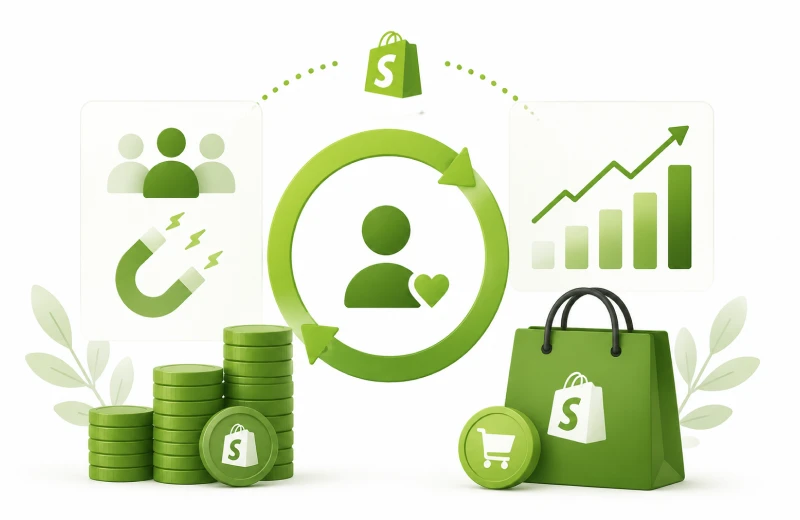
Loyal customers make up just 21% of a typical Shopify brand’s customer base, but they generate 44% of total revenue and 46% of total orders. A repeat customer has already validated your product, trusts your brand, and requires zero acquisition cost to sell to again. The conversion probability for an existing customer is 60–70%. For a new prospect, it’s 5–20%. That 12x differential is why brands that solve retention build durable businesses while brands that rely entirely on new acquisition are permanently fragile.
RETENTION ECONOMICS IN PRACTICE
If you spend $40 to acquire a customer who spends $60 on their first order and your COGS is $25, you barely break even. The second purchase, at zero acquisition cost is where the margin lives. Brands that don’t generate a second purchase within 90 days from a meaningful share of first time buyers are essentially running at a structural loss.
How AI and Customer Analytics Improve Repeat Purchase Rate
Modern ecommerce brands use customer analytics and AI tools to identify which customers are most likely to buy again. By analysing purchase history, product preferences, and engagement behavior, businesses can send more relevant offers and recommendations.
AI can also help predict customer churn before it happens. This allows brands to reengage customers with personalised campaigns, loyalty rewards, or replenishment reminders before they stop buying altogether.
As competition increases, retention strategies powered by customer data often deliver a higher return than acquiring more first time customers.
Five Levers That Move Repeat Purchase Rate Within 90 Days
1. Post purchase email flow
If you don’t have an automated email sequence running in the 7–90 days after a first purchase, this is the single highest leverage starting point. A well structured flow, order confirmation, delivery follow up, educational content, and a repurchase nudge, can lift the second purchase rate by 15–25%.
2. Personalised replenishment reminders
For consumable products, time your re engagement emails to arrive just before the product runs out. A supplement brand sending a replenishment reminder on day 25 of a 30 day supply converts at dramatically higher rates than a generic monthly newsletter.
3. Loyalty programme
Loyalty programme members show 28% higher retention rates and 18% higher AOV. It doesn’t need to be complex, even a simple points for purchases structure gives customers a reason to return to you rather than a competitor.
4. Segment your best customers and treat them differently
Use RFM analysis (Recency, Frequency, Monetary value) to identify your top 20% of customers. Send them early access, exclusive offers, or personalised outreach. VIP customers generate 73% higher AOV and 3.6x more purchases than standard customers.
5. Improve your post purchase experience
45% of customers switch brands due to poor customer service. Fast shipping, easy returns, and responsive support are the baseline for repeat purchase. If your delivery experience or returns process is creating friction, address that before spending on retention marketing.
Closing Thoughts
Repeat purchase rate is the clearest indicator of whether your Shopify store is building a real business or just running an acquisition machine.
The economics are unambiguous: repeat buyers cost nothing to acquire, convert at dramatically higher rates, and spend more per order. A 27% repeat rate means 73% of your customers are leaving and not coming back. That is the retention gap, and closing even a fraction of it will do more for your profitability than any new customer acquisition tactic.
Key Takeaways
- The average Shopify store repeat purchase rate is 27–28.2%, strong performance starts at 30%+
- A 5% improvement in customer retention can boost profits by 25–95%
- Loyal customers represent 21% of a typical customer base but generate 44% of revenue
- Below 20% repeat rate signals a structural problem, fix this before scaling acquisition
- Supplement and health brands lead with 33–36% average repeat rates due to replenishment cycles
- The conversion probability for an existing customer is 60–70% vs. 5–20% for a new prospect
- A post purchase email flow is the single highest leverage retention lever for most Shopify brands
- Loyalty members show 28% higher retention rates and 18% higher AOV
- Always benchmark repeat rate against your vertical, not a cross industry average
Improve Customer Retention With Better Analytics
Improving repeat purchase rate starts with understanding customers. Which products drive repeat orders? Which channels bring returning buyers? Which segments create the highest lifetime value?
DataAnalyticsStack helps ecommerce brands track repeat purchase rate, customer lifetime value, cohort performance, and retention trends through custom analytics dashboards built for growth.
Contact us today to get started.